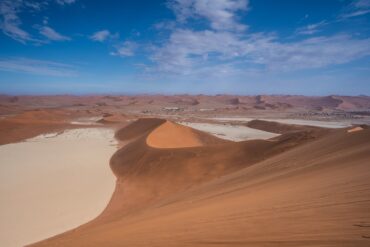
Sossusvlei is one of Namibia’s most iconic travel destinations, renowned for its towering red sand dunes, dramatic desert landscapes, and unforgettable sunrise and sunset views. Situated in the heart of the ancient Namib Desert within the vast Namib-Naukluft National Park, Sossusvlei is a must-visit attraction for travelers seeking some of the most spectacular natural scenery in Africa. The region’s striking contrasts of deep orange dunes, bright blue skies, and white clay pans create a landscape that is both breathtaking and unique, making it a favorite destination for photographers, nature enthusiasts, and adventure seekers from around the world.
Home to famous landmarks such as Dune 45, Big Daddy, and the world-famous Deadvlei, Sossusvlei offers visitors the opportunity to explore one of the oldest deserts on Earth. Climb towering dunes for panoramic views, witness ancient camel thorn trees standing against the stark white clay of Deadvlei, or simply take in the peaceful beauty of this extraordinary environment. Whether you’re planning a Namibia road trip, a luxury safari, or an unforgettable desert adventure, Sossusvlei delivers a truly unique experience that showcases the raw beauty and timeless appeal of Namibia’s desert wilderness.
The Skeleton Coast is one of Namibia’s most mysterious and dramatic travel destinations, stretching along the remote Atlantic coastline where the Namib Desert meets the cold, powerful ocean. Known for its haunting beauty, shipwreck remains, fog-covered shores, and endless dunes, this region offers one of the most unique and atmospheric landscapes in Africa. Much of the area is protected within Skeleton Coast National Park, a vast wilderness that feels untouched and otherworldly, attracting adventurous travellers, photographers, and nature lovers seeking raw, unspoiled scenery.
The Skeleton Coast earned its name from the many shipwrecks and whale bones that once scattered its shoreline, a reminder of the harsh conditions created by the Benguela Current, thick ocean fog, and unpredictable Atlantic swells. Today, rusting shipwrecks still lie half-buried in the sand, creating striking visual contrasts against the shifting dunes and crashing waves. Despite its harsh reputation, the region supports a surprising variety of life, including desert-adapted elephants, lions, hyenas, jackals, seals, and a rich diversity of seabirds and marine life along the coast.
One of the most fascinating aspects of the Skeleton Coast is its extreme and surreal environment. Inland, towering dunes roll endlessly into the desert, while along the coast, dense fog often blankets the shoreline, creating an almost ghostly atmosphere. This combination of desert and ocean makes it one of the most photogenic and visually striking regions in Namibia. Visitors often explore the area by guided fly-in safaris or carefully planned 4×4 expeditions, as much of the park is extremely remote and inaccessible, preserving its untouched character.
The region also holds significant ecological importance as part of Namibia’s protected conservation network. Wildlife has adapted to survive in this harsh environment, relying on coastal moisture, ephemeral rivers, and scarce vegetation. The Hoanib and Hoarusib river systems, which flow through parts of the Skeleton Coast, occasionally attract wildlife deeper into the desert, creating rare and unforgettable safari encounters.
A visit to the Skeleton Coast is unlike any other travel experience in Namibia or Africa. It is a place defined by silence, isolation, and dramatic natural beauty, where the raw power of the Atlantic Ocean meets one of the oldest deserts in the world. For travellers seeking adventure, solitude, and extraordinary landscapes, the Skeleton Coast delivers an unforgettable journey into one of the last true wildernesses on Earth.
Kaokoland, located in the remote northwestern corner of Namibia, is one of the country’s last true wilderness regions and a dream destination for adventurous travellers seeking raw, untouched landscapes. Characterised by rugged mountains, deep river valleys, vast desert plains, and dramatic escarpments, Kaokoland offers an off-the-beaten-track experience far removed from traditional tourist routes. Today, much of the region is commonly referred to as part of the Kunene Region, named after the lifeline Kunene River that forms the border between Namibia and Angola.
One of the defining features of Kaokoland is its extreme remoteness and dramatic scenery. The region is home to some of Namibia’s most iconic landscapes, including the rugged Hartmann Valley, the Epupa Falls on the Kunene River, and endless rocky mountains that stretch toward the horizon. These landscapes are not only visually stunning but also form part of one of the most untouched ecosystems in Southern Africa.
Kaokoland is famously home to the Himba people, one of Namibia’s most well-known indigenous communities. The Himba have preserved their traditional semi-nomadic lifestyle for centuries, maintaining strong cultural practices, distinctive clothing, and a deep spiritual connection to the land. Cultural encounters in this region offer visitors a rare opportunity to learn about ancient traditions that have remained largely unchanged by modern development.
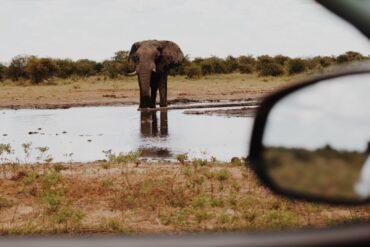
Despite its harsh environment, Kaokoland supports a surprising range of desert-adapted wildlife. Visitors may encounter desert-adapted elephants, giraffes, lions, and various antelope species that have evolved to survive in arid conditions. These animals often move along dry riverbeds in search of water, creating incredible safari moments in one of the most remote wildlife regions in Africa.
The Kunene River is another highlight of the region, forming a lush green lifeline in contrast to the surrounding desert. Epupa Falls, where the river cascades over rocky cliffs into palm-filled valleys, is one of Namibia’s most beautiful natural attractions and a must-visit for anyone travelling through Kaokoland. The river also supports birdlife, small communities, and seasonal wildlife migrations.
Travelling through Kaokoland is an adventure in itself, often requiring 4×4 vehicles, careful planning, and a spirit of exploration. Roads are rough, distances are long, and services are limited, but the reward is an unparalleled sense of isolation, beauty, and authenticity. For experienced travellers, self-drive safaris through Kaokoland represent one of the most rewarding and memorable journeys in Namibia.
With its combination of dramatic landscapes, rich cultural heritage, and true wilderness experience, Kaokoland stands as one of Namibia’s most extraordinary regions. It is a destination for those seeking solitude, adventure, and a deep connection with nature in its purest form.
The Caprivi Strip, officially known as the Zambezi Region, is one of Namibia’s most unique and contrasting travel destinations. Unlike the country’s famous desert landscapes, the Caprivi is a lush, water-rich paradise characterized by winding rivers, dense woodlands, abundant wildlife, and vibrant local cultures. Located in the far northeast of Namibia, this remarkable region borders Angola, Botswana, Zambia, and Zimbabwe, making it a gateway to some of Southern Africa’s most iconic wilderness areas and safari destinations.
The Zambezi Region is home to several outstanding national parks and conservation areas, including Bwabwata, Mudumu, Nkasa Rupara, and parts of the vast Kavango-Zambezi Transfrontier Conservation Area (KAZA), the largest transboundary conservation area in the world. These protected areas support an incredible diversity of wildlife, including elephants, buffalo, hippos, crocodiles, lions, leopards, wild dogs, antelope species, and hundreds of bird species. The region’s rivers and floodplains create exceptional opportunities for both traditional game drives and unique boat safaris, allowing visitors to experience African wildlife from a completely different perspective.
One of the greatest attractions of the Caprivi is its rich network of waterways, including the Zambezi, Chobe, Kwando, Linyanti, and Okavango Rivers. These rivers sustain the region’s lush ecosystems and provide visitors with opportunities for fishing, birdwatching, photography, canoeing, sunset cruises, and wildlife viewing along their scenic banks. During the dry season, large concentrations of animals migrate through the area, creating some of the most rewarding safari experiences in Southern Africa.
The region is also rich in cultural heritage, with communities from several ethnic groups, including the Mafwe, Masubia, Mayeyi, and Mbukushu peoples, maintaining strong cultural traditions and connections to the land. Visitors can gain valuable insights into local life through cultural experiences, village visits, and community-based tourism initiatives that support sustainable development and conservation.
Whether you are seeking a classic African safari, a relaxing river retreat, world-class birdwatching, or a deeper cultural experience, the Caprivi Strip offers an unforgettable journey into a side of Namibia that many travellers never expect to find. Its combination of thriving wildlife, beautiful waterways, and authentic cultural experiences makes the Zambezi Region one of Namibia’s hidden gems and an essential destination for nature lovers and adventure travellers.
Damaraland is one of Namibia’s most spectacular and diverse regions, renowned for its dramatic landscapes, ancient geological formations, rich cultural heritage, and unique desert-adapted wildlife. Located between the Skeleton Coast and Etosha National Park, this rugged wilderness offers visitors an authentic African adventure far from the crowds. With its vast open plains, towering mountains, deep valleys, and striking rock formations, Damaraland showcases some of Namibia’s most breathtaking scenery.
The region is best known for its population of desert-adapted elephants, which have evolved to survive in one of the harshest environments on Earth. Visitors may also encounter desert-adapted lions, black rhinos, giraffes, springbok, oryx, and a variety of bird species while exploring the area’s remote riverbeds and rugged terrain. These remarkable wildlife experiences make Damaraland a must-visit destination for nature lovers, photographers, and safari enthusiasts.
Damaraland is also home to some of Namibia’s most important historical and archaeological sites. The UNESCO World Heritage Site of Twyfelfontein features one of Africa’s largest collections of ancient rock engravings, with thousands of petroglyphs created by hunter-gatherer communities thousands of years ago. Other fascinating attractions include the towering granite peaks of Spitzkoppe, often referred to as the “Matterhorn of Namibia,” and the impressive Organ Pipes and Burnt Mountain geological formations.
Beyond its natural wonders, Damaraland offers visitors the opportunity to experience the traditions and culture of the Damara people, one of Namibia’s oldest cultural groups. Community-based tourism initiatives throughout the region provide meaningful cultural encounters while supporting local conservation and sustainable tourism efforts.
Whether you are tracking desert elephants through dry riverbeds, exploring ancient rock art, hiking among dramatic mountain landscapes, or simply enjoying the vast silence of the Namibian wilderness, Damaraland delivers an unforgettable travel experience. Its combination of wildlife, culture, history, and breathtaking scenery makes it one of the most rewarding destinations in Namibia and a highlight of any self-drive safari or guided tour across Southern Africa.
The Kalahari Desert is one of Southern Africa’s most iconic and expansive landscapes, offering a striking contrast to Namibia’s other desert regions with its red sands, rolling dunes, and surprisingly rich biodiversity. Stretching across Namibia, Botswana, and South Africa, the Kalahari is not a true desert in the traditional sense but a semi-arid savannah that supports a wide variety of wildlife, plant life, and indigenous cultures. In Namibia, the Kalahari is a popular destination for safari travellers seeking open landscapes, authentic cultural experiences, and exceptional wildlife encounters.
Unlike the harsh, rocky deserts of the Namib, the Kalahari is characterised by soft, red sand dunes covered in grasses and hardy vegetation. This environment supports an impressive range of wildlife, including springbok, gemsbok (oryx), kudu, giraffes, wildebeest, zebras, and a variety of predators such as lions, cheetahs, leopards, and hyenas. The region is especially rewarding for game viewing during early mornings and late afternoons when animals are most active across the open plains.
The Kalahari is also home to the indigenous San people, one of the world’s oldest living cultures. Visitors have the opportunity to learn about traditional survival skills, bushcraft, tracking techniques, and ancient storytelling practices that have been passed down for thousands of years. These cultural experiences offer valuable insight into a way of life deeply connected to the land and its natural rhythms.
One of the most appealing aspects of the Kalahari is its accessibility and variety of safari experiences. Travellers can enjoy self-drive adventures, guided game drives, luxury lodge stays, and photographic safaris across vast private reserves and conservation areas. The open landscapes make wildlife viewing particularly rewarding, with long sightlines and dramatic sunsets that create unforgettable photographic opportunities.
Whether explored as part of a larger Namibia itinerary or as a standalone destination, the Kalahari Desert offers a unique blend of wildlife, culture, and scenic beauty. Its warm colours, diverse ecosystems, and deep cultural heritage make it one of the most captivating regions in Southern Africa and an essential stop for anyone seeking an authentic African safari experience.
Etosha National Park is Namibia’s most famous wildlife sanctuary and one of Africa’s premier safari destinations. Covering more than 22,000 square kilometres in northern Namibia, the park is renowned for its vast salt pan, known as the Etosha Pan, which is so large it can be seen from space. The park offers some of the best wildlife viewing opportunities in Africa, attracting visitors from around the world who come to experience its incredible biodiversity and spectacular landscapes.
Etosha is home to an abundance of wildlife, including elephants, lions, leopards, cheetahs, black and white rhinos, giraffes, zebras, wildebeest, springbok, kudu, and numerous other species. The park’s network of natural and man-made waterholes creates exceptional game-viewing opportunities, particularly during the dry season when animals gather to drink. Many visitors consider the floodlit waterholes at the rest camps to be among the highlights of their safari experience, offering the chance to observe wildlife day and night.
One of the unique aspects of Etosha National Park is its accessibility for self-drive travellers. Well-maintained roads, comfortable accommodation options, and clearly marked routes make it one of the best self-drive safari destinations in Africa. Whether you choose to explore independently or join a guided game drive, every day brings the possibility of unforgettable wildlife encounters and breathtaking photographic opportunities.
Beyond its wildlife, Etosha’s landscapes are equally captivating. From open grasslands and mopane woodlands to the shimmering white expanse of the Etosha Pan, the park offers diverse scenery that changes dramatically throughout the year. During the rainy season, parts of the pan fill with water, attracting thousands of flamingos and migratory birds, creating a unique spectacle for birdwatchers and nature enthusiasts.
A visit to Etosha National Park is an essential part of any Namibia itinerary. Combining world-class wildlife viewing, stunning natural beauty, and the freedom of self-drive exploration, Etosha delivers an authentic African safari experience that leaves a lasting impression on every traveller.